Tuesday, January 13, 2015

The Death and Life of Great American Cities


The Death and Life of Great American Cities by Jane Jacobs has become a classic in urban planning since its publication in 1961. I had long wanted to read it, especially since Jacobs lived in Toronto for over forty years. Although Jacobs was an American, I as well as many Torontonians considered her one of our own. Our library system chose Cities as one of its highlighted Raves & Faves several years ago and when new titles were introduced to this ongoing series, I picked up one of our withdrawn copies.

It took me five weeks to finish Cities. During my first two days I was spellbound by the lengthy introduction; so much so that I read it through twice. All I could talk about was how visionary Jacobs was. That is no exaggeration; I did in fact rave about the introduction to several people, including to my partner who has a degree in urban planning. I could see Jacobs's genius in the introduction alone, and after I finished reading it the first time, I felt I had to read it over again. It was so full of valuable insights, that had I been given a highlighter to mark the key points, I would have given every sentence a golden hue.

For good reason Cities has earned its reputation as a groundbreaking work on city planning. Jacobs was not afraid to turn the prevailing orthodoxy on urban planning upside down by calling some of its prevailing attitudes foolish. Her views which shook the 1960's are now on university curricula. Some of her theories seem so basic now, that even one like myself who is not schooled in urban design can see the sense in them. How could her ideas have been so controversial over fifty years ago? I feel that her outright challenge of the orthodoxy really threw her urban colleagues. Jacobs rocked the boat, which had been idly floating by for decades. It's as if your mother, fed up with your messy bedroom, had finally had enough: she tore her way in there and started cleaning up and reorganizing. She grabbed your head, focussed your attention on what she was saying and made you listen. And then no one could deny that she was right.

I cannot state enough how mesmerized I was by this book. At the beginning I was nodding in agreement with her views on sidewalks and the whole idea of using them to create vibrant, well-used and most importantly, safe urban spaces:

"When people say that a city, or a part of it, is dangerous or is a jungle what they mean primarily is that they do not feel safe on the sidewalks."

How true. When children play outside they often stay close to home, and use the sidewalk adjacent to their home. Jacobs was not swayed by the prevailing view that sidewalks were places to be avoided. Clearly, sidewalks were the lifeblood of the city and where children, as well as all inhabitants, should find the greatest sense of security:

"Some city sidewalks are undoubtedly evil places for rearing children. They are evil for anybody. In such neighborhoods we need to foster the qualities and facilities that make for safety, vitality and stability in city streets. This is a complex problem; it is a central problem of planning for cities. In defective city neighborhoods, shooing the children into parks and playgrounds is worse than useless, either as a solution to the streets' problems or as a solution for the children.
"The whole idea of doing away with city streets, insofar as that is possible, and downgrading and minimizing their social and their economic part in city life is the most mischievous and destructive idea in orthodox city planning. That it is so often done in the name of vaporous fantasies about city child care is as bitter as irony can get."

Instead, one should develop the urban landscape of the sidewalk as a safe environment for all city citizens, not just children. Jacobs dismisses the zoning of urban play spaces, and goes to great length to reveal how these artificial playgrounds, often situated far away from residences, are often vacant even during the summertime:

"It is futile to try to evade the issue of unsafe city streets by attempting to make some other features of a locality, say interior courtyards, or sheltered play spaces, safe instead. By definition again, the streets of a city must do most of the job of handling strangers for this is where strangers come and go. The streets must not only defend the city against predatory strangers, they must protect the many, many peaceable and well-meaning strangers who use them, insuring their safety too as they pass through. Moreover, no normal person can spend his life in some artificial haven, and this includes children. Everyone must use the streets."

Jacobs grabbed your attention and forced you to confront reality. Open spaces and fields of grass within urban settings may look good on paper and on designers' cutesy mock-ups but they were dead zones in real life:
  
"But people do not use city open space just because it is there and because city planners or designers wish they could."

Jacobs herself visited these spaces in New York City, where she then lived, and also visited urban green spaces in other American cities, and noted how few visitors they received. She saw more children at play on the streets surrounding their homes, either on the sidewalk or in the alleys or rear parking lots. Planners cannot expect people to visit their green spaces just because they are there:

"You can neither lie to a neighborhood park, nor reason with it. 'Artist's conceptions' and persuasive renderings can put pictures of life into proposed neighborhood parks or park malls, and verbal rationalizations can conjure up users who ought to appreciate them, but in real life only diverse surroundings have the practical power of inducing a natural, continuing flow of life and use. Superficial architectural variety may look like diversity, but only a genuine content of economic and social diversity, resulting in people with different schedules, has meaning to the park and the power to confer the boon of life upon it."

Integration of work and play is essential in vital city planning. Jacobs was no fan of creating these special parklands. She crushed the prevailing belief that urban centres needed to be dispersed over fields of verdant lawns, as if grass was the all-encompassing solution to relieving planners' needs. People who were living in such high concentrations were considered to be a danger to themselves. Open grassy spaces to the rescue!:

"American downtowns are not declining mysteriously, because they are anachronisms, nor because their users have been drained away by automobiles. They are being witlessly murdered, in good part by deliberate policies of sorting out leisure uses from work uses, under the misapprehension that this is orderly city planning."

and:

"The development of modern city planning and housing reform has been emotionally based on a glum reluctance to accept city concentrations of people as desirable, and this negative emotion about city concentrations of people has helped deaden planning intellectually."

While the first three chapters of Cities, all devoted to sidewalks, captivated my attention, I was less interested when Jacobs discussed districts versus neighbourhoods within cities. I could not grasp the differences between the two. Nor was I moved by the chapters on the slumming and unslumming of cities or "gradual money" and "cataclysmic money". These were the rare chapters where I just couldn't wait to turn the last page. However Jacobs covered topics--perhaps never addressed before 1961--about border vacuums, mixed uses and diversity of city businesses and facilities, and even the schedules of urban citizens. I could see how these subjects revolutionized the then current world of city planning. Later chapters covered such topics as subsized dwellings, erosion of cities and salvaging projects. All of these topics were in can't-put-down chapters. Jacobs was able to make such topics read as page-turners and not just for a readership of urban planners.   

Cities was at times a laborious read, yet for the most part its 448 pages of jam-packed text sped along. If this book was reprinted, it would be three times as long owing to today's trend of fleshing out pages with wide margins and gaping spaces between lines. Don't let the formatting--black slabs of solid text--dissuade you from reading this classic.

Friday, January 9, 2015

Information Doesn't Want to be Free: Laws for the Internet Age


Anyone who has an interest in the role the Internet plays in our lives is highly encouraged to read this book. It is relatively short, while covering the often complex world of Internet technology, the issues of copyright, the ease of transmitting and downloading copies, the attempts to regulate, surveil, and prosecute infringers, as well as happily, to use it to generate revenue.

Cory Doctorow is a dedicated fighter for copyright reform, a technology advocate, a science fiction/technology author, as well as being a prolific blogger (see www.boingboing.net). He uses his prodigious writing skills to deftly sift through all the above issues to present a clear argument to demonstrate that even though copies can easily be accessed through the Internet, content creators and publishers can still earn money.

He cuts to the chase - content creators and publishers want to make money from their works. People want to be able to access the Internet (including free copies) without interference. These ideas don't have to be mutually exclusive. He criticizes arguments that call for control and surveillance of the Internet, and he is highly critical of the relentless pursuit by media companies and their political lobbyists to legislate against Internet copying. These efforts just do not work to achieve the desired goals, and have a detrimental effect on the Internet as a whole. He sums up this point in these words:

Here are some other things that don't make money:

  • Complaining about piracy.
  • Calling your customers thieves.
  • Treating your customers like thieves.

It was interesting that I chose to read this book just before a big story broke here in Canada - it turns out that one third of Canadian Netflix subscribers have figured out ways to access content only available in the American Netflix service.  Full disclosure - I am one of these people that has figured out how to do this. It is very easy. If I were to take advantage of this and watch a TV show through American Netflix while subscribing to Canadian Netflix (for which I have no other option - and I believe the cost is pretty much the same), does that make me a thief? Am I a dread pirate?  I assume that Netflix operates on a model that if someone watches a movie through Netflix, then Netflix pays the content owner. In any case, Netflix somehow compensates the content owner in order to make the movie available in the first place. So everyone is getting paid, so what care I about the arbitrary licensing contracts made between corporations? Doctorow talks about this issue in some detail in the book - if a product is available somewhere in the world, why would you not also make it available elsewhere at the same time, especially if a paying audience is champing at the bit to acquire it? Another example - if someone is really keen to buy the new season of Downton Abbey in North America, why restrict its first broadcast to the U.K.? Many people in North America will then turn to illegal downloads by necessity (because they seriously want to watch this show, and talk to others about this show, before getting hit by spoilers) - forced into a life of crime that could have been prevented AND profited from.

Doctorow has plenty of advice for content creators and publishers, and presents them as three laws (he was told he needed three):

  1. Any time someone puts a lock on something that belongs to you and won't give you the key, that lock isn't there for your benefit.

    This law deals with digital rights management (DRM), which theoretically restricts copying of documents (books, audio, video, etc.), but is easily circumvented.

    Somewhat ironically, I read this book via an eBook that I borrowed from my library's Overdrive eBook collection.  These eBooks contain DRM that governs the length of loan period and prevents copying and sharing. Knowing Doctorow's views on this, and that he routinely stipulates that his eBooks contain no DRM, I'm curious about how much DRM is actually on this eBook (I haven't tested my eBook file though).
  2. Fame won't make you rich, but you can't get paid without it.

    This law refers to the advantages of proliferating free copies of an artistic work - you only have the potential to be paid if people learn that your work exists.

    "When copying gets easier, it behooves us to adopt strategies that thrive on cheap copying. There are lots of people out there who might want to buy your work or compensate you in some other way - the more places your work can find itself, the greater likelihood that it will find one of those would-be customers..."
  3. Information doesn't want to be free, people do.

    This law describes how the Internet has become an integral part of our lives, beyond a vehicle for entertainment.

    "The stakes for getting copyright right have never been higher. There has never been a fight over entertainment-related technology where the consequences for everyone outside the entertainment industry were potentially more disastrous than they are now."

So when the entertainment industry says "It's us or the Internet," it's getting to a point where the majority will choose the Internet. Doctorow believes that it doesn't need to come to that choice though - "...old media will continue to find a home in the new world," once they come to the realization that they'll have to invent new ways of making money, just like they have adapted many times through history already.

Doctorow nicely sums up his book with the following three ideas:

  1. If you're a publisher, don't let your retailers usurp your relationship with your customers by using DRM.
  2. If you're a creator, don't let your publishers use your copyright as an excuse for rules that let it corner the market on delivering your art to your audience.
  3. And no matter who you are, remember that this Internet thing is bigger than the arts, bigger than the entertainment business - it's the nervous system of the twenty-first century, and, depending on how we use it, it can set us free, or it can enslave us.

Book Club Discussion Questions
  1. How has the Internet affected how you use entertainment media (books, music, movies, TV shows, etc.)?  Do you still purchase/borrow physical products (DVDs, CDs, books, etc.)?  What else do you buy online?
  2. How else do you use the Internet?  How important is it to your life?
  3. Had you ever come across the term "Net Neutrality" before reading this book?  Does Doctorow's discussion (on this or any other topic presented in the book) spur you to take any action to champion an affordable, neutral, spy-free Internet?
  4. Many of the issues discussed in this book revolve around the issue of readily being able to copy things, or being able to obtain copies without paying anything.  Do you use computers to copy things, or acquire free copies?
  5. What do you think of the position Doctorow takes regarding copying?
  6.  Do you think it is possible for content creators and any publishers/music labels/studios etc. to still make a profit in an environment without digital locks and with copyright law that allows for personal use copies?
  7. Would you want to be an artist (or other content creator) in today's Internet reality?
  8. Discuss the style in which Doctorow has written this book.  The subject has the potentiality to be quite dense given the technical nature of the subject matter, plus all the international treaties, laws, and legislative history that one needs to wade through.  How clear were his arguments?
  9. As you were reading this book, did you wish the author would have spent more time on any particular areas?
  10. If you could ask Cory Doctorow any questions, what would you ask him? 

Tuesday, January 6, 2015

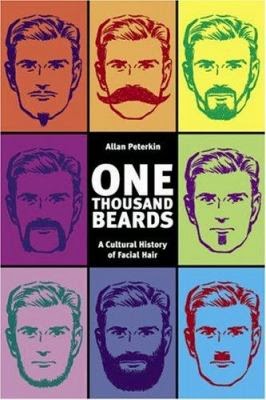
One Thousand Beards: A Cultural History of Facial Hair

The Beard.

Scholarly if not scraggly, foppish if not virile, it is “the growth of hair on the face of an adult man” (dictionary.com), but it is no mere biochemical symptom of gender. According to Allan Peterkin's book, One Thousand Beards: a Cultural History of Facial Hair, the beard has symbolized many things, from fashion-pariah to flag of allegiance to political traitor.

It is said that condemned Sir Thomas More, on the block about to be beheaded, pushed his beard aside and said: “My beard has not been guilty of treason. It were an injustice to punish it.”

It was true that More was a man of both great composure and wit, but this is what he says at his death?

I remember reading Shakespeare and wondering what all the fuss was about.  Hamlet complains in his play (Hamlet II.ii.544-5): “Who calls me villain? Breaks my pate across? Plucks off my beard, and blows it in my face?” and so does King Lear’s Gloucester (King Lear III.vii. 36): “By the kind gods, ’tis most ignobly done To pluck me by the beard.” 

Such references even show up in nursery rhymes! “Not by the hair on my chinny-chin-chin” is the oath of each of the Three Little Pigs.

Swear on your facial hair? What is that worth? Well!

Peterkin enlightens us.

Beards have been taxed (100 rubles per year during Russia’s Peter the Great’s reign), waxed, beaded, dyed, metallized, plucked, pumiced, and scraped. They are even named—ever heard of the “Saucer Beard” ? The “Sugar Loaf”? The “Swallowtail”?  One’s political, military or religious status all had power over one’s whiskers. 

Peterkin covers historical beards, political beards (essentially who told whom to shave or grow, depending) and contemporary beards, including the beard in psychology (Peterkin, who is a U of T professor of psychiatry, enjoyed critiquing the various Freudian ideas) and in 20th-century popular culture, especially North American gay culture and American celebrity culture. Peterkin also tells us how to shave to achieve each particular fuzzy look and how it was done over the past couple thousand years.

I learned new words, too: “deracinated” (“to pull up by the roots” according to dictionary.com) and “pogonotrophy” (“the act of cultivating, or growing and grooming, a mustachebeardsideburns or other facial hair” according to wiktionary.org). Who knew hirsuteness could sprout wordiness?

The best story from this book is the one that claims cause for hundreds of years of war between France and England.

“In the mid-1150s, Louis [VII of France] reputedly felt guilty for having burned alive several hundred refugees in a church in Vitry. For spiritual guidance, he consulted Peter Combard, the Bishop of Paris at the time, who told him to shave as penance. Unfortunately, his wife and queen, Eleanor of Aquitaine, was so aghast at his bare face that she had the marriage annulled. Not only that, she promptly married the much-whiskered Henry II, King of England. When her dowry, including Aquitaine itself, was ceded to England, some 300 years of war ensued. Now we know: the chronic French-English tensions long ascribed to everything from language to fashion-sense are actually the result of a beard.”

Notwithstanding the earlier 1066 invasion of England by William of Normandy (and the messy re-marrying done earlier still) and the Napoleonic defeat in 1813, the loss of that French beard must have helped along almost 1000 years of strife between France and England.  

Who knew the fearsome power of the Beard? But isn't it real proof that vanity is the downfall of us all?


Monday, January 5, 2015

The Cave and the Light: Plato Versus Aristotle, and the Struggle for the Soul of Western Civilization


Here is the briefest description I can provide for the philosophies of both Plato and Aristotle: Plato is other-worldly, Aristotle is this-worldly. Plato walks with head upturned desiring to describe the timeless, perfect realm of Ideas. Aristotle crawls in the grass and mud eyeing all the unique details and wanting to place everything in its proper category.

In describing the history of the human endeavour to make sense of the world, of our desire to know what the world is and who we are and how these two fit together, one could do much worse than submit the names of Plato and Aristotle as perennial options. Arthur Herman in his book The Cave and The Light accomplishes something I value—in fact it is something I look for in all good non-fiction—to make the reader conscious of a perspective that is always present but remains unarticulated or unilluminated the way shadows are all around us but never attended to by our thoughts until we focus on them. Plato and Aristotle are the permanent shadows of our thinking.

Herman’s argument is that the philosophies respectively propounded by these two great fathers of the Western tradition are more than just the creative musings of two talented thinkers grappling with our ignorance. More fundamentally Platonic and Aristotelian philosophies represent two facets of the way we can make sense of the world. That is to say, our brains are unavoidably Platonic and Aristotelian in nature. If the brain were a coin each philosopher would claim one side. This is deep DNA level stuff. That Plato and Aristotle are influential goes without saying. Alfred North Whitehead, a notable British philosopher, had famously claimed that all philosophy is a series of footnotes to Plato. Herman suggests that same claim can be made of Aristotle’s writings. But to suggest that Plato and Aristotle somehow represent fundamentally how we can understand the world is an argument I have not heard before.

The book examines the intricate dance between these two great ways of thinking about the world. Herman submits that any time one philosophy should dominate over the other you’ve got problems. Too much Plato brings with it rigid dogmatism and elitist arrogance. For example, the Neo-Platonists, like Porphyry, thought they were the only ones in possession of the true path to fleeing the tomb of the body. Too much Aristotle and you have narrow-minded sterility and not seeing the forest for the trees; just read even a smidgen of late medieval scholastic philosophy, which was heavily influenced by Aristotle, and you’ll get the idea. To the Yin-Yang concept of the Eastern world which its devotees say one must keep in balance to have a harmonious existence, the West offers up the necessity of a proper equilibrium between Plato and Aristotle. Interesting.

I have to admit I like the argument. I have studied a little philosophy and the book presented a new opportunity for me to think back to all those books, treatises and essays I have read. After some reflection I believe Herman is correct. Where a philosophy seems to falter or demonstrate a less than rigorous logical and experiential line of reasoning can be profitably attributed to a failure to adequately deal with the tension between the Platonic and Aristotelian strands within the philosophy. Take your pick: Descartes, Hegel, Kant, Heidegger, Nietzsche, Hume, St. Augustine, Locke. All of them can be read with an eye for this defect. 

While reading the book I imagined myself a Philosophy-Doctor treating philosophy-patients who showed signs of too much love for Plato with an antidote of Aristotle and vice versa.  What’s the cure for a too high esteem of Plato’s Republic, simple, read Aristotle’s Nicomachean Ethics. If you enjoy philosophy this book is a must read. If you are interested in the history of ideas and in western culture generally you will also enjoy this book.


Friday, December 26, 2014

Pro: Reclaiming Abortion Rights


Katha Pollitt's new book, Pro: Reclaiming Abortion Rights, is a thorough, no-holds-barred takedown of the hypocrisy of the anti-abortion-rights movement - not only in the most obvious sense that people who claim to be "pro-life" also (usually) support war and the death penalty, oppose gun control, and encourage lethal terrorism against abortion providers and clinic staff, and of people who claim to care about women and children, but oppose all social supports that might improve the lives of actual living children. Pro also exposes the perhaps less obvious hypocrisy of how the anti-abortion movement has created conditions that result in more unwanted pregnancies, more abortion, more later abortions, and less safe abortions. Using unassailable logic and facts, Pollitt exposes what the real agenda of the anti-abortion movement is and has always been: punishing women for trying to live modern, emancipated lives.

Pollitt exposes, too, the contradictions in how the current abortion debate is framed, and how the majority of people - not the vehemently pro-choice or the vehemently anti-abortion, but the "muddled middle," as Pollitt calls it - thinks about abortion. The vast majority of North Americans, it appears, believes abortion should be safe and legal, but also regard the procedure with distaste, discomfort, and shame. Pollitt makes it sparklingly clear why "legal, but..." doesn't work, why it can't work, and why we shouldn't want it.

This book is about something many people might find a strange contradiction: reclaiming abortion as a social good.
First, the concept of personhood, as applied to the zygote, blastocyst, embryo, and at least until late in pregnancy, fetus, makes no sense: It's an incoherent, covertly religious idea that falls apart if you look at it closely. Few people actually believe it, as is shown by the exceptions they are willing to make.

Second, the absolutist argument that abortion is murder is a mask by which people opposed to the sexual revolution and women's advancement obscure their real motives and agenda: turning back the clock to an idealized, oversimplified past when sex was confined within marriage, men were the breadwinners and heads of families, Christianity was America's not-quite-official religion, and society was firmly ordered.

Third, since critiquing what came before does not necessarily help us move forward, I want to help reframe the way we think about abortion. There are definitely short-term advantages to stressing the anguish some women feel when facing the need to end a pregnancy, but in the long run presenting that as a general truth will hurt the pro-choice cause: It comes close to demanding that women accept grief, shame, and stigma as the price of ending a pregnancy. I want us to start thinking of abortion as a positive social good and saying this out loud. The anti-abortion movement has been far too successful at painting abortion as bad for women. I want to argue, to the contrary, that it is an essential option for women - not just ones in dramatic, terrible, body-and-soul destroying situations, but all women - and thus benefits society as a whole.
For anyone deeply involved in the pro-choice movement, as I have been, Pollitt breaks no new ground. You'll be familiar with all the ideas, trends, and arguments. But to read them all gathered together, laid out logically, backed by impeccable research, and pronounced without apology in Pollitt's lively, witty style, is thrilling.

For people who think of themselves as "pro-choice but" - the muddled middle, the majority, who say abortion should be legal and permissible in certain circumstances - this book is for you. Pollitt argues in the clearest, most convincing manner: none of your restrictions make sense. All of them must go. If that seems extreme, read this book with an open mind, then see how you feel.

Pro is written in an American context, and it's important for everyone in the United States to read it, especially moderate liberals who adopt the "safe, legal, and rare" position.

But this is an important book for Canadians to read, too. Without directly referencing the history of abortion rights in Canada, Pollitt shows us why Dr. Henry Morgentaler and the movement that grew around his work were correct to insist on no abortion law, and why Canada's courts were correct to realize that was necessary. The arguments in Pro explain why the pro-choice movement in Canada kicks up such a loud and sustained noise every time proposed legislation threatens to restrict abortion rights. (The Harper government has tested the waters many times under the guise of private members' bills. Rights don't protect themselves.)

Pollitt argues for abortion as a basic human right: necessary to women's full participation in society, necessary for her survival and her safety, not just in extreme circumstances, but in all circumstances. She excoriates the hypocrisy of a society that worships motherhood as an abstract concept, but in reality, so belittles and minimizes the experience of parenthood as to imagine that a woman can simply have a baby and raise a child any time she becomes pregnant, no matter her current life circumstances - then dismisses the notion that she must do otherwise as abortions "for convenience".

Pollitt also widens the lens to include all aspects of reproductive justice, including access to affordable and reliable birth control, free and affordable childcare, paid parental leave, and working hours designed for working parents. She places abortion in an historical context - it has always existed, in all societies and in all eras - and reminds us what happens to women who live in Ecuador, Ireland, most of the US, and other countries where women's access to this basic, necessary health care has been denied.

After teasing out the many sacrifices, the pain, the accommodation, the compromises, that women routinely make in order to bear children, Pollitt writes:
To force girls and women to undergo all this against their will is to annihilate their humanity.
And that is the bottom line. (A version of this review was originally published on wmtc.)

Wednesday, December 3, 2014

The Use and Abuse of Literature


“No one who is not deeply corrupted will think of making learning a form of commerce for his own enrichment.” (37).

Marjorie Garber, in her book The Use and Abuse of Literature, examines all of the ways the written word has been promoted, performed, presented, plagiarized, and consumed by the public. It is a wide ranging work. A big swath of what we might call the literary universe is discussed in non-academic terms. The guiding question that fuels all the explorations is definitional: what is literature?  Garber keeps both edges of her chosen title close together. Literature of every kind has by turns been used in a myriad of ways and abused in just as many. The work doesn’t just examine the highbrow stuff. The philistine stuff gets plenty of room to disco. The literary world, Garber argues, is constantly evolving. Literature is a living breathing thing and we will continue to talk and absorb literature in all its different guises. For example, Shakespeare will always remain new because every generation has to absorb him, comment on him, praise or complain about him. The same goes for comics.

The Use and Abuse of Literature reads like a cultural history of literature, the ways that people and society have responded to literature and how it has shaped us over the centuries. Literary studies—from the exercises of the great critic-connoisseurs to the essay writings of high school kids—is a process. It is an ongoing discussion with the works of the past reinterpreted and digested in new ways with each successive generation. There is no ultimate, true once and for all time, reading of any literary work (prose, poetry or otherwise).

This is a fine study but I have one criticism. The narrative is choppy. So much that orbits the literary sun is given space to move between the covers of this book, the views of Samuel Johnson, poetic artifices, the idea of an English major, deconstruction and the culture wars to mention just a few, and at times I felt the celestial satellites were unconnected, or rather I would have benefited from a clearer indication of the mysterious force holding the whole thing together. As a final comment, I would say you have to be in a particular mood to read this book. It is intellectual history, a socio-cultural look at the written word and fortunately the book never descends into overly erudite exploration. The opening quote captures the style well. It is like conversing with an articulate and knowledgeable literary culture critic. Each chapter opens a new perspective on some aspect of literature and this particular book’s merit rests in its abundance of little insights any one of which might lead a reader to take up once again a familiar title with a changed perspective or to give some hitherto unexplored type of presentation, say memoir, a chance to work its magic.

Saturday, November 29, 2014

This Changes Everything: Capitalism vs. the Climate


This Changes Everything: Capitalism vs. the Climate, by Naomi Klein, is incredibly difficult to write about. I've been putting sticky notes beside important paragraphs as I read, and my copy now looks like an art project, bristling with coloured paper squares. I can say without exaggeration that this is one of the most important books you'll ever read.

In her clear, readable prose, Klein demonstrates exactly what is destroying our planet: unregulated, unchecked capitalism, brought to you by the scourge of our era, neoliberalism. (US readers may be more familiar with the term neoconservatism.)

In her 2007 book The Shock Doctrine, Klein showed us how corporate interests exploit crises to enact policies that enrich a small elite, using the holy trinity of neoliberalism: privatization of the public sphere, deregulation of the corporate sector, and lower corporate taxation, paid for with cuts to public spending. Now Klein widens her lens to demonstrate how that same orientation actively prevents us from taking the necessary steps to halt and reverse climate change, and with it, the impending destruction of a habitable Earth.

Klein succinctly and precisely diagnoses the root problem. In order to challenge climate change, in order to reverse a course that threatens billions of lives and is ultimately suicidal for humanity, radical change is required. We must stop living as if infinite growth is possible on a finite planet. This goes way beyond separating our trash into different bins and using more efficient light bulbs. It means dismantling the fossil-fuel industry, powering our entire society with renewable energy sources (it is possible!), and ultimately, abandoning the idea of growth as the basis for our economies.

Tackling climate change means, ultimately, dismantling neoliberalism itself.
A belief system that vilifies collective action and declares war on all corporate regulation and all things public simply cannot be reconciled with a problem that demands collective action on an unprecedented scale and a dramatic reining in of the market forces that are largely responsible for creating and deepening the crisis.
This means rethinking the false notion of "free" trade. Ontario, for example, would be decades ahead in wind and solar production, not to mention good, green jobs, but for the crippling mandates of free-trade agreements. "Free" deserves scare quotes.
Not only do fossil fuel companies receive $775 billion to $1 trillion in annual global subsidies, but they pay nothing for the privilege of treating our shared atmosphere as a free waste dump.
Klein reminds us that if free-trade regulations block our ability to disrupt our dependence on fossil fuels, then those regulations must be rewritten. And so it goes for any number of policies that express the neoliberal ideology, which, as Klein writes, "form a ideological wall that has blocked a serious response to climate change for decades."

Of course, nothing is free; the question is who pays the price. The price may be unemployment, or jobs that can't sustain a decent life, or overcrowded classrooms, or a generation condemned to poverty-stricken old age. The price may be flammable drinking water, or whole villages beset by rare cancers. The neoliberal agenda wreaks its havoc in ways seen and unseen. Shell's Arctic oil rig ran aground when it braved impassable winter weather, attempting to beat a timeline that would trigger additional taxes. In Montreal, the MM&A rail company received government permission to cut the number of staff on its trains from five to a single engineer: thus the Lac-Megantic disaster. However measured, it's a price paid by ordinary people, while corporations wallow in profit.

In turn, dismantling neoliberalism would mean rethinking our governments, too, as democracies driven by lobbyists, corporate donors, and industry interests - valuing profits over people - pave the way for policies that are killing us all. Can a society where this can happen be rightly considered democratic?
...the most jarring part of the grassroots anti-extraction uprising has been the rude realization that most communities do appear to lack this power; that outside forces - a far-off central government, working hand-in-glove with transnational companies - are simply imposing enormous health and safety risks on residents, even when that means overturning local laws. Fracking, tar sands pipelines, coal trains, and export terminals are being proposed in many parts of the world where clear majorities of the population has made its opposition unmistakable, at the ballot box, through official consultation processes, and in the streets.

And yet consent seems beside the point. Again and again, after failing to persuade communities that these projects are in their genuine best interest, governments are teaming up with corporate players to roll over the opposition, using a combination of physical violence and draconian legal tools reclassifying peaceful activists as terrorists.

....Only two out of the over one thousand people who spoke at the panel's community hearings in British Columbia supported the project. One poll showed that 80 percent of the province's residents opposed having more oil tankers along their marine-rich coastline. That a supposedly impartial review body could rule in favor of the pipeline in the face of this kind of overwhelming opposition was seen by many in Canada as clear evidence of a serious underlying crisis, one far more about money and power than the environment.
When reviewing the proposed solutions to climate change, Klein skewers the chimeras that don't and can't work, from the corporate boondoggle known as cap-and-trade, to various technological fixes that would take our fantasy of controlling nature to bizarre new heights.
Indeed, if geoengineering has anything going for it, it is that it slots perfectly into our most hackneyed cultural narrative, the one in which so many of us have been indoctrinated by organized religion and the rest of us have absorbed from pretty much every Hollywood action movie ever made. It's the one that tells us that, at the very last minute, some of us (the ones that matter) are going to be saved. And since our secular religion is technology, it won't be god that saves us but Bill Gates and his gang of super-geniuses at Intellectual Ventures.
Klein also heaps contempt on the so-called partnerships between large environmental organizations and the fossil-fuel industry, which are something like the partnership between the pig and Oscar Mayer. As Klein puts it, "the "market-based" climate solutions favored by so many large foundations and adopted by many greens have provided an invaluable service to the fossil fuel sector as a whole."

This Changes Everything illuminates an impressive array of activism, introducing most readers, I'm guessing, to a new expression: Blockadia. Blockadia represents the global, grassroots, broad-based networks of resistance to high-risk extreme extraction. From Greece to the Amazon to New Zealand to Montana to British Columbia, the resistance is in motion. Taking many forms - the divestment movement pressuring institutions to sever economic ties with the fossil-fuel industry, the towns declaring themselves "fracking free zones," the civil disobedience that physically slows the building of pipelines while court challenges continue - Blockadia is creating space for public debate and the possibility of change.

In many places, Blockadia is led by people from indigenous communities. Not only are indigenous peoples often the first victims of climate destruction - witness, for example, the off-the-chart cancer rates of First Nations people living downstream from Canada's tar sands - but their worldviews may form the basis of our way forward. On a Montana reservation where young Cheyenne are learning how to install solar energy systems - cutting residents' utility bills by 90% while learning a trade, creating an alternative to a life spent working for the coal industry - a female student makes this observation.
Solar power, she said, embodied the worldview in which she had been raised, one in which "You don't take and take and take. And you don't consume and consume and consume. You take what you need and then you put back into the land."
I want everyone to read this book, and because of that, I hesitate to share this unfortunate truth: ultimately, This Changes Everything filled me with hopelessness and despair. I wouldn't say it made me pessimistic, as I am optimistic about humankind's ability to change ourselves and our systems, if we choose to. Rather, the book filled me with outright hopelessness, because I don't believe we will even have the opportunity to make that choice. The forces aligned against the necessary change are massive, and massively powerful. Untold profits depend on the system not changing, and what's more, gargantuan profits are being reaped off the destruction itself. The oligarchs who profit from climate change are associated with the most powerful tools of violence every known - the mightiest armies and the greatest amorality.

Adding to the difficulty, our society clings to what Klein calls "the fetish of centrism": of the appearance of reasonableness, of "splitting the difference, and generally not getting overly excited about anything". This is the illogic that dictates we must "balance" the interests of the petroleum industry with our need for clean water, or the profits of real estate developers with the human need for shelter. This fetish of centrism allows the government and its partners in the media to label as "extremists" people who want to protect water and land from catastrophic oil spills.

Added to this, huge numbers of ordinary people, led by corporate media and astroturf faux activists, align themselves against their own interests, stoked by fears of imagined foes (be they communists, immigrants, or feminists) and cling to notions of a supposedly free market, which in reality is heavily subsidized by taxpayers. This global market is anything but free: the risk is socialized in every way possible, but the returns are strictly privatized.

If you've read Jared Diamond's Collapse, you are familiar with the concept that societies don't always do what's best for them. Societies make choices that ultimately chart their own demise. I do not despair of our ability to remake our world, but I know that the forces aligned against us will stop at nothing to prevent us from doing so. The most powerful people on the planet can shield themselves from the effects of climate change until it is too late for the rest of us.

And yet... and yet. I feel hopeless, but my feelings don't matter.

What matters is this: we have little time, and we must try. Resistance movements have changed cultures. Resistance movements have brought mighty empires to their knees, have ended deeply entrenched systems: slavery, colonialism, apartheid. For centuries, there was something called the Divine Right of Kings, a concept which must have seemed permanent and immutable. Now it does not exist. Capitalism, as currently practiced is killing our planet - killing us. We cannot shrug our shoulders.

If you agree - and more importantly, if you disagree - read this book. (This review was originally posted at wmtc.)